
At TheHealthBoard, we're committed to delivering accurate, trustworthy information. Our expert-authored content is rigorously fact-checked and sourced from credible authorities. Discover how we uphold the highest standards in providing you with reliable knowledge.
What are the Different Types of Homeostatic Control Mechanisms?
Homeostatic control mechanisms occur in all living organisms and can vary tremendously in form and precise function, but in all cases there are three main regulatory mechanisms: receptors, the control center, and effectors. In humans and other warm-blooded creatures, these usually work together to balance blood sugar, pressure, and alkalinity or pH. Reptiles, insects, and most sea animals focus their homeostatic energy on body temperature and relative hydration, and the process in plants is primarily focused on growth and efficient energy output. In all cases, though, signals cross the organism and effect change using a complex interplay between receptors, effectors, and a centralized control center.
Receptors

In simple terms, “homeostasis” is an organism’s way of maintaining stability in all of its internal functions. It is a complicated process that depends first on a problem being detected; then on a solution being developed; and finally a change being made. Receptors are cells that receive messages about a change in the organism’s internal environment, and they carry out the first part of the process.

In humans receptors tend to be most prevalent in the blood vessels, where they receive and translate information about blood pressure and chemistry. In most cases they are actually programmed to monitor blood conditions, and when things seem out of balance they will trigger a message to be sent to the control center.
Receptors are also common in the lymphatic vessels, small moist organs that are spread throughout the body. Cells in these glands typically monitor moisture levels, which indicate basic hydration; when levels are low, the receptors can signal this in hopes of triggering thirst. They also look for signs of swelling, which is often a sign of infection or autoimmune disease.
The Control Center

The control center is typically the brain, but can be any organ that has the ability to change its course or impact the inputs and outputs of other parts of the plant or animal in question. When the center gets a message from the receptors that something is amiss, it issues the order for how things should be fixed. If blood pressure is too high, for instance, it may order the heart to slow down; if cells are dehydrated, it may order water to be leached from places like the throat, mouth, and lips, triggering a person or animal to search for water.
Effectors

Rarely can the control center itself put the needed changes into effect, though. For this it depends on effectors, which are cells, tissues, and organs that are ready to receive orders and able to carry them out. Effectors make changes by following the direction of the control center, and are the ones actually carrying out a restoration to homeostasis — though the process couldn’t be done without the other two key players.
Basics of Negative and Positive Feedback

Corrections made by these three mechanisms typically fall into two categories, either negative or positive. Negative feedback is when the receptors notice something that has gone off course, like blood sugar spiking or core temperature dipping very low, and the control center directs the effectors to bring things back to normal. The messages focus on restoring things to a baseline and counteracting the “negative,” or off-course, behavior.
Positive feedback homeostatic control mechanisms work the opposite way, essentially pushing the body even further from normal. These occur relatively rarely. Blood clotting is one example of a time when the receptors will notice something amiss — blood loss and clumping — and the control center will order the relevant effectors to continue clotting. The continuous clotting of platelets is positive feedback because it keeps increasing and growing away from a normal set point rather than decreasing and returning back to the original set point, but it is necessary in order to prevent a person or animal from bleeding to death.
AS FEATURED ON:
AS FEATURED ON:


-
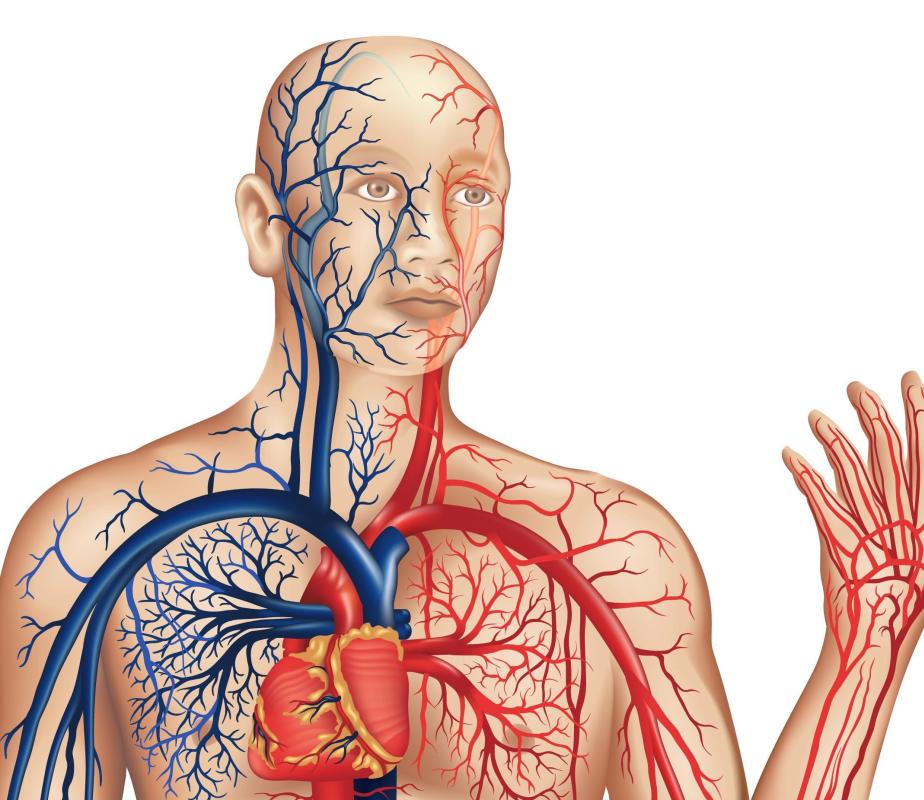
![The vascular system helps the body maintain homeostasis.]() By: Roman DekanThe vascular system helps the body maintain homeostasis.
By: Roman DekanThe vascular system helps the body maintain homeostasis. -
![The homeostatic control mechanism called positive feedback cause platelets to form to stop bleeding.]() By: WideAwakeThe homeostatic control mechanism called positive feedback cause platelets to form to stop bleeding.
By: WideAwakeThe homeostatic control mechanism called positive feedback cause platelets to form to stop bleeding. -
![Blood pressure is regulated by homeostatic control mechanisms.]() By: niyazzBlood pressure is regulated by homeostatic control mechanisms.
By: niyazzBlood pressure is regulated by homeostatic control mechanisms. -
![Diabetes is caused by a homeostatic imbalance in the body.]() By: dalaprodDiabetes is caused by a homeostatic imbalance in the body.
By: dalaprodDiabetes is caused by a homeostatic imbalance in the body. -
![Some people cannot process sugar properly, and risk of complications from high blood glucose levels.]() By: praisaengSome people cannot process sugar properly, and risk of complications from high blood glucose levels.
By: praisaengSome people cannot process sugar properly, and risk of complications from high blood glucose levels.


Discuss this Article
Post your comments