
At HomeQuestionsAnswered, we're committed to delivering accurate, trustworthy information. Our expert-authored content is rigorously fact-checked and sourced from credible authorities. Discover how we uphold the highest standards in providing you with reliable knowledge.
What are the Different Types of Screws?
 L. S. Wynn
L. S. Wynn
L. S. Wynn
Screws are amazingly versatile and powerful fasteners. The basic concept is a threaded cylinder that is used for holding all sorts of things together, including wood, plastic and metal. Different types of screws have been developed to maximize efficacy for particular applications. The various types of screws can be categorized according to driving methods, head shape, type of threads and the material and finish used to make the screw.
Driving Methods
- Slotted: Slotted screw heads are perhaps the oldest and most common variety; a linear slot in the head accepts a standard screwdriver, which is also called a flat-head screwdriver.
- Phillips: The Phillips head is an improvement to the slotted screw; cross-shaped grooves that do not extend to the edge of the screw head accept a Phillips-head screwdriver. These heads, which have a slight circular shape where the slots cross, provide a larger mating surface between the screw and the screwdriver, which minimizes wear and helps prevent slipping. Although many people refer to any screw head that has cross-shaped grooves as a Phillips head, there are other types of screws that have similar slots. A cross head features two full-length slots that cross, which allows a flat-head screwdriver to be used and makes the screw usable even if one slot has been worn away. Another type that has two short slots that cross but does not have a small circular shape at the center is known as a Prince, Frearson or Reed head.
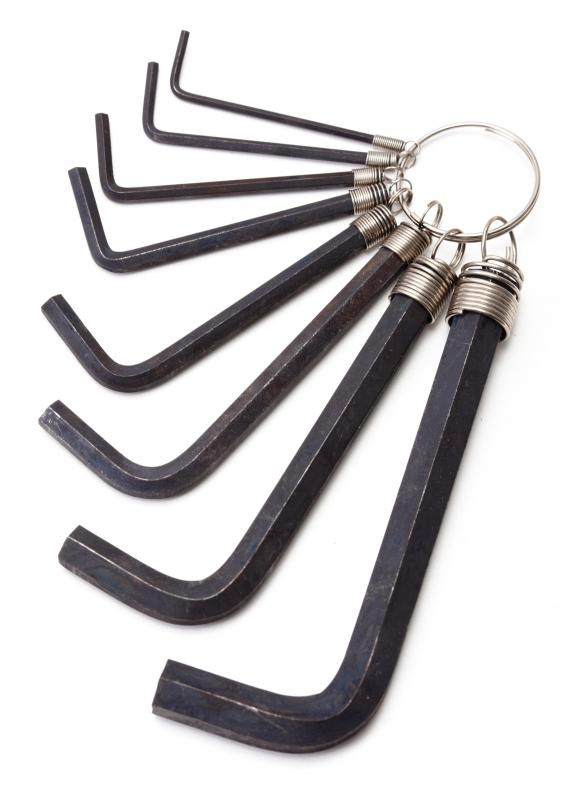
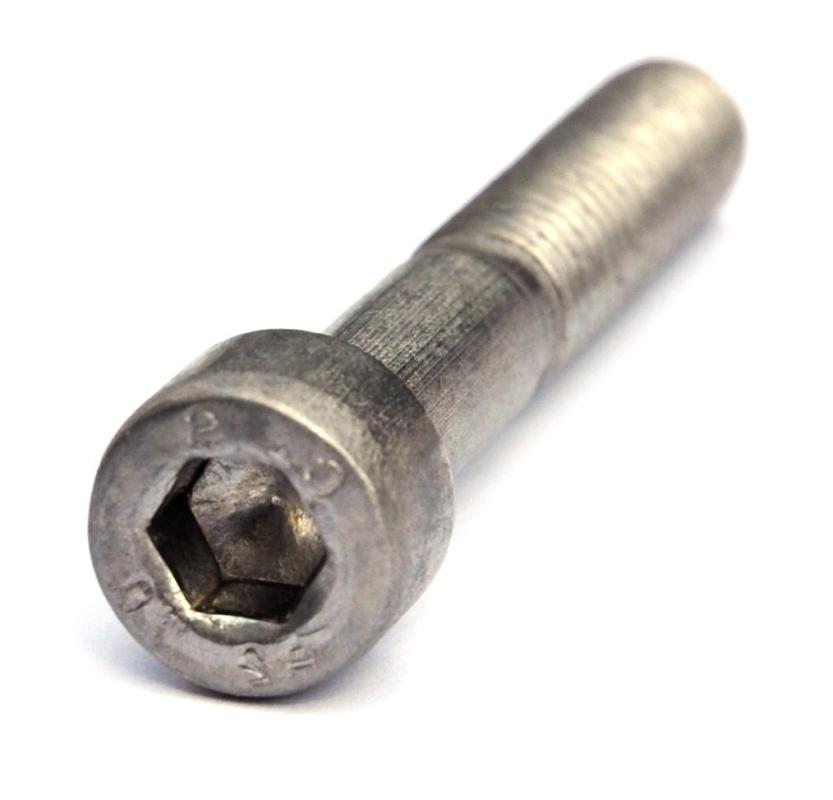
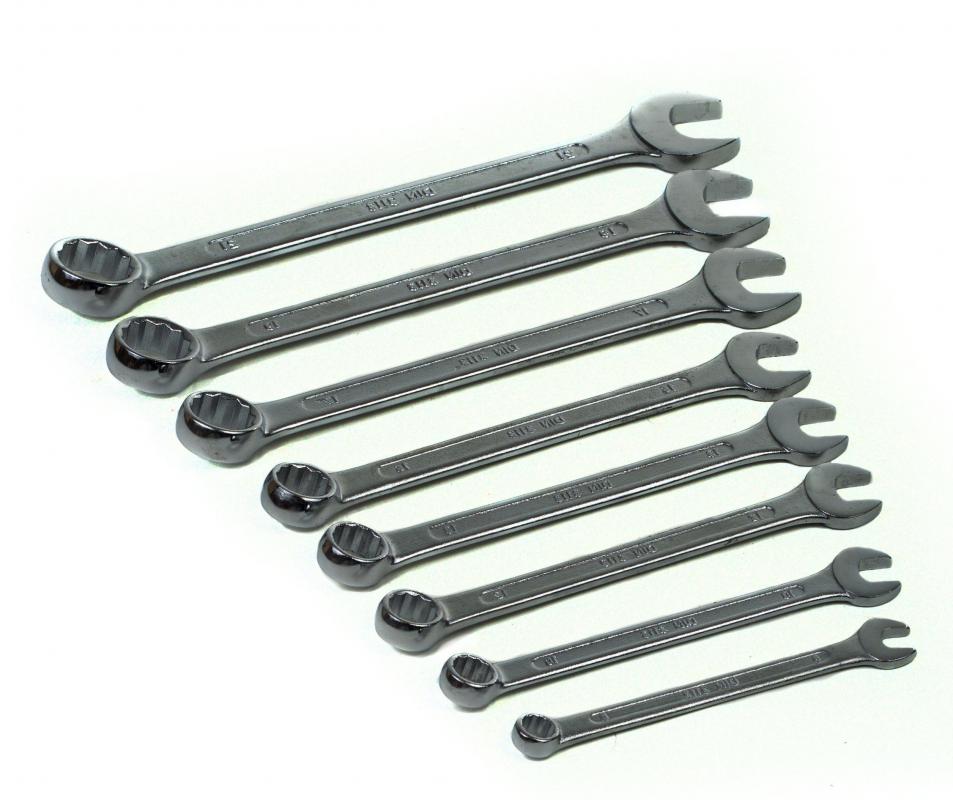
- Hex: There are two types of screws that have hex heads — one that has a hexagonal recession in the head and one that does not have any grooves or slots at all. A hex socket screw or Allen screw requires the use of an Allen wrench, which has a hexagonal shaft that is inserted into the recession in the screw head. The other type of hex screw has an entire head that is hexagonally shaped. A wrench set, socket wrench or adjustable wrench is required for driving hex screws.
- Square: Also know as a Robertson screw head, it has a square indentation to minimize slipping. It also requires a special driver for tightening and loosening.
- One way: One-way heads are a variation on the slotted screw. They can be tightened with a standard screwdriver, but they are tamper-resistant because they require special tools for removal.
- Torx: A torx head has a recession in the shape of a six-pointed star to provide even more surface area for driving. It requires the less-common torx screwdriver and therefore can be considered to be tamper-resistant.
- Others: There are many other, less-common driving methods that have been developed, with types of screws having heads that feature recessions of various shapes. Among these are polydrive, double hex, triple square and tri-wing screws.
Head Shape
- Pan: This is the standard screw head profile with an average diameter and average height.
- Button: This is similar to a pan head but has a top that is more curved.
- Round: A round head is even more pronounced than a button head.
- Flat: This has a flat top and a tapered underside that is intended to be driven into a countersunk hole.
- Oval: The underside is tapered like a flat-head screw, but it has a rounded top.
- Truss: This is a large-diameter heads with a low profile.
- Fillister: This has a thick profile with a slightly rounded top.
- Others: As with driving methods, there are many less-common varieties as well.
Thread Varieties
- Wood: The threads on wood screws usually are coarse and deep to help them grab the wood.
- Machine: Machine screws have finer threads than wood screws. They are designed to be used in conjunction with a nut or tapped hole.
- Sheet metal: These screws usually are short and have coarse threads that are designed to grab onto relatively thin sheet metal.
- High-low: These screws have two sets of threads with alternating heights. High-low screws are specifically designed for certain plastics and other low-density materials.
- Self-tapping: Self-tapping or thread-forming screws feature threads that are designed to tap their own holes. These work well in softer materials such as wood and plastic but are not suitable for harder materials.

In addition to all the varieties described above, screws can be made out of various materials, including steel, brass, aluminum and nylon. Screws also can have various finishes such as zinc plating, black oxide or non-stick coating. A screw that will be exposed to the elements might be galvanized to prevent rusting. Screws also come in a seemingly endless variety of diameters and lengths.
AS FEATURED ON:
AS FEATURED ON:


-
![Various nuts, bolts and screws.]()
Various nuts, bolts and screws. -
![Allen wrenches - can be used with hex screws.]()
Allen wrenches - can be used with hex screws. -
![A hex socket screw.]()
A hex socket screw. -
![Pieces of sheet metal might be secured to each other or to another surface with sheet metal screws.]() By: KybelePieces of sheet metal might be secured to each other or to another surface with sheet metal screws.
By: KybelePieces of sheet metal might be secured to each other or to another surface with sheet metal screws. -
![Hex screws can be turned with wrenches.]() By: Anthony MaragouHex screws can be turned with wrenches.
By: Anthony MaragouHex screws can be turned with wrenches. -
![Lag screws, which have coarse threading and a hexagonal head, can be used to secure wooden planks and other materials.]() By: junejLag screws, which have coarse threading and a hexagonal head, can be used to secure wooden planks and other materials.
By: junejLag screws, which have coarse threading and a hexagonal head, can be used to secure wooden planks and other materials. -
![The head of a Phillips screwdriver looks like a plus sign when viewed head on.]() By: Sergii FigurnyiThe head of a Phillips screwdriver looks like a plus sign when viewed head on.
By: Sergii FigurnyiThe head of a Phillips screwdriver looks like a plus sign when viewed head on.




Discussion Comments
What size thread is a ground bar screw?
Gulmite screws are used on the sides of old Crown School Buses.
There are 24 points on the side of the head.
What type of screw thread has an equilateral triangle thread form?
Set screws are also used with nuts.
A visual representation of the article.
@wanderer, the difference between bolts and screws are that both are externally threaded fasteners, but a bolt is intended to be tightened or released by a nut, while a screw is intended to be inserted into holes in assembled parts being tightened by torquing the head. Then you have bolts which are screws, and vice versa, for example, machine screws!
Could any one suggest that where we put hard drive screws, rack Screws, printer screws, camera screws, and general mounting screws in the below mentioned screw types, assuming that all of above mentioned screws are made up of steel.
For threaded rods, go to Rockler or Hartville tool and buy the threading tool, make your own out of dowels. There are threaded rods made from wood which was pressure-saturated with some kind of plastic. They are expensive!
To start out, look in the Machinery Handbook or Standard Handbook for Mechanical Engineers. Then go to McMaster-Carr and the other industrial hardware vendors. Cheers, Ghost54
Tapcon screws are designed for concrete or cement, a pilot hole needs to be drilled first, then the screw can be installed.
There's also screws made to screw into plastic. Looking into screw point the screw profile is not round, often like a rounded corner equilateral triangle.
Trim screws (or trim head screws) are missing from your list.
How can I tell one screw from another?
I am looking for threaded rods that are made out of wood and are used to put shelves together with wooden spindles that have threaded ends.
where can I find these.
thanks, naz
What are the main differences between BOLT and SCREW? Can these name be used interchange?
Here are what I know:
Bolt to be used with nut
Screw to be used alone (self tap)
Why do we call LAG BOLT but not LAG SCREW or do we?
There are also lag screws (or lag bolts) which are usually heavy-duty fasteners that have a hex head and are tightened with a nut.
Drywall screws are specially designed to be installed with a drill with a drive-bit; you can hang drywall very quickly and easily with these specialized screws.
Post your comments