
At TheHealthBoard, we're committed to delivering accurate, trustworthy information. Our expert-authored content is rigorously fact-checked and sourced from credible authorities. Discover how we uphold the highest standards in providing you with reliable knowledge.
What are the Side Effects of Probiotics?
Probiotic side effects are uncommon, and most people can use them without experiencing any adverse effects. Some people do get flatulence and minor stomach discomfort when they first start to use products containing them, but this typically stops as the body adjusts. Very rarely, probiotics cause infections or extreme immune system responses, but this usually only happens in people with compromised immune systems. Clinicians use antibiotics to treat rare side effects when they occur.
Digestive Problems

Flatulence is a harmless, if potentially embarrassing, and uncommon side effect associated with probiotics. The natural digestive process involves bacteria breaking food down and producing sulfur-containing gas as a byproduct. Consuming probiotics adds more bacteria to the digestive tract, which can increase gas production. People who eat foods high in sulfur, such as asparagus, cauliflower, and Brussels sprouts, tend to experience more gas than others.
Sepsis

Lactobacilli and bifidobacteria are the two most commonly used probiotic strains, and although they're normally safe, they can be risky for certain groups of people, including those who have reduced immunity. There have been rare cases of lactobacilli ingestion resulting in an extreme immune response known as sepsis. This occurs when the body mistakes these microorganisms for invasive species and releases chemicals to ward them off, which triggers inflammation throughout the body.
Bacteremia

Bacteremia, which is sometimes called blood poisoning, is another extremely rare side effect that people with reduced immunity are susceptible to. Normally, blood is a sterile environment, carrying oxygen and nutrients to all cells and tissues. The intestinal tract acts as a barrier, preventing bacteria from entering the bloodstream and infecting other parts of the body. When people with compromised immune systems ingest probiotics, there is a small possibility that these microorganisms can enter the bloodstream. Bacteremia is an extremely serious condition, and can be fatal. Infants, the elderly, and those with a compromised immune system from a disease like HIV or a treatment like chemotherapy are most at risk for this complication.
Preventing Side Effects

It's often possible for healthy people prevent flatulence and stomach pain from probiotics by starting with a small amount, usually half the recommended dosage. This helps prevent an immediate and drastic change to the intestinal environment, which must remain balanced. Gradually introducing the good bacteria gives the body time to adjust, which greatly reduces the risk of discomfort. Some people accidentally overdo it when starting out because they're unaware that this bacteria is naturally found in fermented foods such as yogurt, milk, soy beverages, and miso, so it's important for people to consider their entire diet when starting to take them.

Using probiotics from a reputable source is also important, since their production is not always closely regulated. If in doubt, it's best for individuals to ask a healthcare provider which one to use. Additionally, people taking supplements should let their healthcare providers know, just to be safe, and immunocompromised people should consult with a medical professional before using them.
AS FEATURED ON:
AS FEATURED ON:


-
![Digestive problems such as gas can be a side effect of probiotics.]() By: nebariDigestive problems such as gas can be a side effect of probiotics.
By: nebariDigestive problems such as gas can be a side effect of probiotics. -
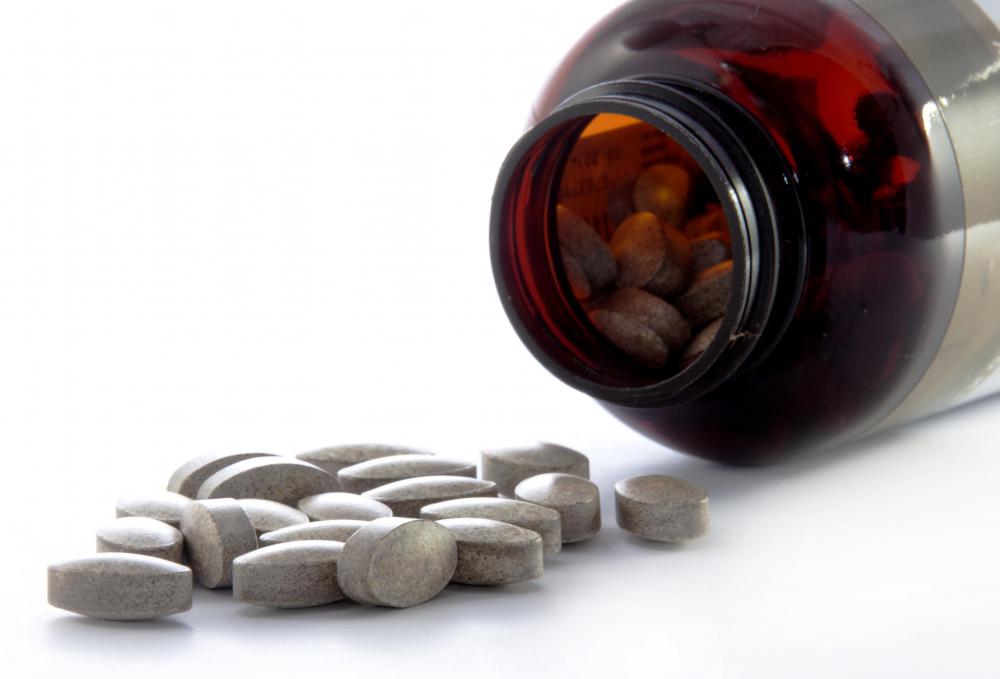
![Probiotics are often taken in supplement form.]() By: compuinfotoProbiotics are often taken in supplement form.
By: compuinfotoProbiotics are often taken in supplement form. -
![Probiotic supplements can aid digestive health.]() By: Balint RaduProbiotic supplements can aid digestive health.
By: Balint RaduProbiotic supplements can aid digestive health. -
![Probiotics are found in foods like yogurt.]() By: JackFProbiotics are found in foods like yogurt.
By: JackFProbiotics are found in foods like yogurt. -
![Probiotic milk can allow individuals who are lactose intolerant to consume dairy products without getting sick.]() By: inesbazdarProbiotic milk can allow individuals who are lactose intolerant to consume dairy products without getting sick.
By: inesbazdarProbiotic milk can allow individuals who are lactose intolerant to consume dairy products without getting sick.



Discussion Comments
I started probiotics 5 days ago to boost my immune system. I've been on a couple of different antibiotics. Yesterday I got up with a horrible cold and flu like symptoms. After some Googling I read that it's a side effect of the probiotics. I stopped taking them and actually feel a bit better today. I won't go near those man made critters again.
I started taking a probiotic supplement six days ago. Within a day the loose bowels started, but not too bad. Then the bloated feeling, and clothes that don't fit. After five days, I stopped taking them. The next day the vomiting started,many would not stop. I had 12 hours of non-stop puking, then a feeling of nausea, and achiness, flu-like symptoms without the fever that lasted for days. Will never go near another probiotic again.
I'm so glad to find this article and posts. It makes sense and helps me understand what probio companies aren't educating us about. Everything usually should start out being tested in moderation to see how we react anyway.
I think too many probio strains combined in products hit too many nooks and crannies all at once and create too much die-off, methinks. You know what, though? These commercial live culture yogurts aren't really cultured for more than probably a few hours during mass production from what I've read. Also, if you think the lactose in dairy yogurt is bothering you, it shouldn't, because that is what the probios eat and turn it into another form of sugar. Maybe it's the secondary form of sugar galactose that can bother people, especially if they like the dairy yogurt and therefore eat too much all at once. Food for thought.
I've just started on probiotics five days ago to aid in the treatment of my IBS. I started getting a couple of side effects after the second day. These have been headaches and excessive gas. At first, I was a bit miffed that I was getting more gas than what I already experienced with my existing condition, but it then led me to do quite a lot of research online and I have surmised that it is simply just my body adapting to the changes taking place. It is supposed to take about a week or two until these symptoms begin to disappear (here's hoping).
I have also noticed (as many on this thread have mentioned) that different bodies will react to different strains of bacterium. What works for me, may not work for you, even if you have the same condition as myself. Unfortunately it is a case of trial and error. This is also why a lot of doctors don't always mention probiotics as it simply just isn't guaranteed to work. A main problem so many people do face, however, is an unbalanced gut of bad bacteria due to the overconsumption of sugar and food additives. We simply weren't designed to be putting this crap in our bodies at such extreme levels.
I've been taking these for a couple of months now and had issues with gas at first but that is normal. The body has to adjust. I cannot eat yogurt without getting a stomach ache. I have divertiticulosis and a compromised immune system.
Now that I have adjusted, I have been able to eat more and have regular bowel function now. Also, I finally started gaining a little weight, which I could not before because I was not properly digesting food. It's best to start with a half dose and work up a little and the side effects will not be so bad. Also, make sure you're not taking them with foods that will overload you with probiotics like yogurt, etc.
The first time I took probiotics I got a yeast infection. The second time I took probiotics I got symptoms of a bladder infection but the doctor could find no bacteria and diagnosed me with cystitis.
I think the new bacteria in the probiotics took over in my intestines and the yeast traveled into other areas and caused infections else where. Now I am worried that I have interstitial cystitis. They say that cystitis is a result of systemic yeast infection. I currently am trying to starve the yeast in my body by avoiding sugar and yeast and will never ever take another probiotic again.
I've had rheumatoid arthritis most of my life, and now fibromyalgia as well. The past year or so I've been particularly unwell so, after listening to the advertising, I thought maybe a probiotic might help my immune system. Well, it's certainly done something because I've never been so unwell or in so much pain.
The only thing I'm doing differently is taking the pro-b so I thought I'd check online to see if there are any potential side effects. I thought they were completely safe but now I'm not so sure. I'll stop taking them now.
I'm dizzy, feeling sick, headache, generally tired and out of sorts, have chest pains, gas -- putrid stinking gas. All of this since starting probiotics. I just stopped taking them today, After a month, I figure I allowed enough time for my system to adjust. Let's hope it adjusts favorably to not having them.
When you read about probiotic side effects, you're likely to read about "die off" on message boards. However, while this may occasionally contribute to side effects, the more likely explanation is that one or more strains in the probiotic product are over-stimulating the immune system. As another example, when a person contracts seasonal influenza, it's actually not the virus that causes most of the symptoms. It's the immune reaction to the virus that causes most of the symptoms.
The same phenomenon can happen when multiple strains of probiotic bacteria are suddenly introduced into the body of a sensitive individual. It may lead to a limited and possibly sustained immune reaction in some people, albeit less than what one would experience with a hostile form or bacteria or influenza virus.
I have IBS and read a lot about eating yogurt to help the symptoms so I tried it and after a week it hit me. I got cramping and loose bowls -- the one thing I was trying to avoid. Not everyone can tolerate probiotics and I am staying away from them from now on. I don't care what anyone says about how good they are for you. I have tried many times to eat yogurt and my body just doesn't do well on it.
IBS is awful to have and you never know what will affect you. It's so tricky! You just have to relax and not let it bother you too much because the more you worry, the worse it gets!
I just started taking Accuflora a week ago and I thought it was a dream come true. I'm concerned because I've been constipated for a few days now and it's just not normal for me to not "go" after my morning coffee. On the positive side, my appetite has improved massively, no longer have constant stomach pain and nausea I've lived with for years and my mood was very good all week.
I saw on a popular doctor show that a 50 billion probiotic was very beneficial to digestion. I don't have any problems but thought it could only improve proper digestion. I did research and bought some pretty expensive probiotics. I have been constipated and gassy since I started them four days ago, which is why I searched and found this article. I will give it a few more days but did expect the opposite reaction.
If you are experiencing some chronic intestinal-related discomfort, I recommend giving the Lady Soma Probiotics a try. It's the same concept as that Dannon Activia yogurt but way more useful, because people with tummy trouble often have lactose/dairy problems and can't eat yogurt. I was getting a lot of bloating and discomfort after eating just about anything and was starting to get freaked out.
I've been taking these Lady Soma Probiotics for almost two weeks now and have definitely noticed a difference. I haven't been having uncomfortable food/intestinal reactions, and without getting too explicit, visiting the toilet these days is practically something I look forward to now. I feel "regular" and "productive" for the first time in months and have a feeling that I had too much intestinal bacteria.
I hope they work for you, too, because it's no fun to be bloated and gassy all day!
I have been getting serious muscle spasms in the back of my thigh. The pain is excruciating and last for one to five minutes. I've had at least four of these within the past 45 days, which is when I started taking probiotic supplements (Schiff Digestive Advantage).
I consider my immune system to be in good condition as I exercise two to three times a week and have no other health issues that are not controlled with meds. I am 70 years young.
I'm going to stop the probiotics for a month before I consult my doctor as to other possible causes for the muscle spasms.
A week ago I took a pill of gnc ultra 75 billion probiotics. I had extreme side effects from it. My mind felt as if it was racing fast and I could not concentrate. Afterward, I felt extremely depressed. It was not a normal depression; it felt like a chemical one. I also had muscle spasms around my neck and my leg.
Two days after, I drank a cup of yogurt and I had similar reactions again. It has been six days and the feelings are still lingering. I am having a hard time concentrating and my mind does not feel it is functioning properly.
Is it possible that this is happening because of d-lactate acidosis? I had recently been diagnosed with h pylori bacteria and I had finished the therapy with the antibiotics. I was interested in using probiotics in order to further strain the helicobacter. I am wondering if this feeling from the probiotics will go away. Does it take time for the probiotics to leave your system or did the probiotics colonize, leaving me with a further occurrence of these side effects?
I had no idea that milk and miso contained probiotics! I have been drinking milk and eating miso soup for years, and I have a weakened immune system.
Maybe that's why I've had so many problems with intestinal infections. I have been through a lot of pain over the years because of them. I will have to ask my doctor about this.
Does anyone know if soy milk contains probiotics? I still want to be able to eat cereal with something that resembles milk, but only if it is safe. I will give up my cereal forever if it is causing me pain.
@Oceana – I used to get yeast infections frequently, but I hated yogurt. Even learning that it might help my situation wasn't enough to make me eat it.
My doctor recommended probiotics supplements. Since I could swallow them in pill form without having to taste anything yucky, I got some.
I did stop getting yeast infections, but I got an intestinal infection that was very painful. I had stabbing pains, soreness, and cramps, and my doctor told me to stop taking the probiotics. She put me on antibiotics, and I am fine now, but I will never touch another food that has probiotics in it.
I started eating yogurt because I heard that the probiotics were supposed to help prevent yeast infections. I had been getting a lot of those, so I figured that eating yogurt would be an easy way to stop them.
It worked. I had been getting about three infections a year, and once I started eating yogurt, I didn't get another one.
As a bonus, I started having less bloating and cramping. I now eat at least one carton of yogurt a day. With so many flavors available, it is the most enjoyable prevention technique and gas medication out there.
@animegal - I would quit eating the probiotics yogurt if it is just making you gassy and have diarrhea. Some people's systems just don't do well with foreign bacteria being added to them. I personally think that too many probiotics products are being advertised as being a cure all and they really aren't.
If you want to help your stomach and be more regular I would suggest just going the old-fashioned route and eating more fruits and vegetables, as well as a lot of brain. You should be careful of the newest gimmicky things as they very seldom give you what they promise. It's a real shame too, as a lot of them can actually make you feel even worse, as I am sure you've found out.
I recently started eating a yogurt that is advertising having good probiotics in it, and I have been feeling really gassy since I began eating it. Do you think that I should quit having the yogurt, or will this symptom pass?
I am also suffering from a bit of what sounds like probiotics diarrhea which is really embarrassing. I suppose it could just be my system realigning itself but it isn't a very pleasant experience. If I do need to stop eating the yogurt is there anything else I can do to help my digestive system. I originally started adding the yogurt to my diet because I was feeling bloated and it was supposed to help with that.
I started taking a probiotic supplement last week and have been feeling tired, and very sluggish in general. There is a mild constipation going on as well.
I'm not too familiar with probiotic products, but a friend of mine who's taken them before told me that the side effects generally go away after about a week or so of taking them. It's just been a week for me, so I hope the fatigue goes away as I get used to it.
My friend also told me not to take any alcohol or eat too much sugar while I'm on the supplement as that worsens the side-effects. What's the reasoning behind that? Is it because of the yeast that probiotics release in the body?
@honeybees-- I also experience gas and bloating sometimes when I eat probiotic foods. I think I agree with @sunshined that it's probably the food causing those symptoms more than the probiotic.
Yogurt is already a food that tends to cause gas because it naturally contains live cultures in it. When manufacturers also add more probiotics to yogurt, it can either increase or decrease these symptoms. It depends on the person because everyone metabolizes food and reacts to microorganisms differently.
I think it's best to try out different probiotic foods to see which works better than others. And probiotic supplements might work better for you in general. I personally like probiotic yogurt a lot. Probiotic yogurt causes less gas and bloating than regular yogurt does for me. And since I'm a diabetic, I think it improves my digestion a lot.
I'm surprised to hear that probiotics can cause constipation and weaken the immune system. I also thought that they were supposed to do exactly the opposite.
Probiotic foods are really popular these days and highly advertised by celebrities and health gurus. I also purchased probiotic yogurt several times when I was sick so that it would improve my immune system. It never occurred to me that it could actually do just the opposite. But reading about it in this article, the possibility seems logical. I think it's pretty normal for the body to consider newcomer microorganisms to be foreign and potentially dangerous.
I wish these side effects, which are pretty serious in my view, were more elaborately described publicly. I don't think most people who consume them regularly are aware of them at all.
@honeybees - I had a similar situation happen to me. I saw so many TV commercials about the benefits of eating yogurt on a regular basis so did the same thing.
I found out that I had the best results when I took probiotics supplements. I didn't have the side effects when taking the supplements that I did when trying to get these through certain foods.
Everybody is different and reacts differently to food and substances they eat and swallow. I think it is important enough to get probiotics in my diet, that I wanted to find a way to include them and get the results I was looking for.
Has anyone else experienced side effects such as gas, bloating and cramping when adding a probiotic to their diet?
I find it so interesting that some of the side effects of probiotics are the same as what you are trying to take care of in the first place.
I began taking probiotics for digestion problems and started out eating one carton of yogurt every day.
After a week of this, I felt like I had more symptoms than before I started. I stopped eating the yogurt every day and these symptoms went away.
Now I don't know what to do. I wonder if I keep eating the yogurt will it eventually help me, or am I better off not eating it at all?
Post your comments