
At WiseGEEK, we're committed to delivering accurate, trustworthy information. Our expert-authored content is rigorously fact-checked and sourced from credible authorities. Discover how we uphold the highest standards in providing you with reliable knowledge.
What does It Mean to Plead the Fifth?
 Tricia Christensen
Tricia Christensen
Tricia Christensen
"Pleading the fifth" is the phrase commonly used in the US legal system that describes a person’s right to not share self-incriminating information in a trial. The fifth here refers to the Fifth Amendment of the US Constitution, which grants various rights to people, including the right not to testify against oneself in a court of law. It’s important to note, though, that the scope of this right is very limited: the amendment does not allow a person to decide not to testify if doing so would incriminate another person. Outside of the courtroom people sometimes use this phrase more casually, usually as a way of implying that they can’t say anything on a certain subject without making themselves look bad.
Who Can Use It

The rights of the Fifth Amendment are available to any witnesses in criminal or civil trials, but they only apply when a person is testifying under oath. Most of the time they only apply to actual crimes, too, not just civil infractions. The right comes up in civil trials if a person is asked something that might relate to a crime unrelated to the core of the case.

When people who are themselves charged with crimes, known as “defendants,” invoke the amendment’s protections they typically abstain from appearing at all. This means that they never take the witness stand; in most cases they aren't permitted to answer some questions but avoid others. Other witnesses, however, are usually able to pick and choose, and can use the Fifth Amendment's protections on a more "on and off" basis.

Even though the pleading stems from the Constitution, people don’t usually have to be US citizens to use it. A lot depends on their place of residence and legal status, but in most cases anyone brought to testify in a US courtroom will be covered by the amendment’s protections.
Approaches in Trial
When a witness or defendant testifies under oath and doesn't want to answer a specific question on the grounds that it might be self-incriminating, he or she might respond with a variation of "I plead the fifth," "I take the fifth," or "I refuse to answer on the grounds that this may incriminate me." Most of the time, people do this if the information they would share would actually make themselves appear guilty of a crime which they could then be apprehended for or charged with at the conclusion of the trial.

While refusing to answer questions can be a stumbling block for trial attorneys, there are some methods for getting around witnesses who want to use this tactic. One common approach is to offer the witness immunity. That is, lawyers may promise not to prosecute a witness in exchange for his or her potentially incriminating testimony. This is usually only a good idea if the witness’ testimony dramatically strengthens the case, or if it provides some sort of “missing link” of information needed to resolve the case.
If the prosecutor isn't willing to grant immunity in exchange for the testimony, either because the testimony isn't that damning or because the crime admitted to is too serious to not charge, a prosecutor may make a plea deal with the witness. In a plea deal, a prosecutor will promise to charge that witness on a lesser charge or recommend a lesser sentence in exchange for the testimony. These approaches are not always foolproof, however, and defense attorneys will often use information about these deals to attack the credibility of the witness' testimony.
Importance of Honesty
Regardless of the approach, if a prosecutor gets a witness on the stand, he or she must do so with the reasonable belief that the testimony being offered is true. Lawyers are prevented from knowingly permitting witnesses to make truly false statements on the stand, and doing so can open the possibility for charges, fines, and professional sanctions. Trials where knowingly false testimony has been given are often ordered to start over again, too, which is known as a “re-trial.”
In Casual Speech
The legal phrase "to plead the fifth" is sometimes also used in everyday speech. People may say it in casual settings when they’re asked something they simply don’t want to answer, usually because that answer might put them in a bad light. The phrase has no legal weight outside of court, and is typically used as an idiomatic expression to imply, sometimes almost jokingly, that the speaker wants to avoid self-incrimination.
Tricia Christensen
Tricia has a Literature degree from Sonoma State University and has been a frequent WiseGEEK contributor for many years. She is especially passionate about reading and writing, although her other interests include medicine, art, film, history, politics, ethics, and religion. Tricia lives in Northern California and is currently working on her first novel.
Learn more...
Tricia Christensen
Tricia has a Literature degree from Sonoma State University and has been a frequent WiseGEEK contributor for many years. She is especially passionate about reading and writing, although her other interests include medicine, art, film, history, politics, ethics, and religion. Tricia lives in Northern California and is currently working on her first novel.
Learn more...AS FEATURED ON:
AS FEATURED ON:









-
![A witness who is testifying under oath can plead the fifth to avoid self-incrimination.]() By: qingwaA witness who is testifying under oath can plead the fifth to avoid self-incrimination.
By: qingwaA witness who is testifying under oath can plead the fifth to avoid self-incrimination. -
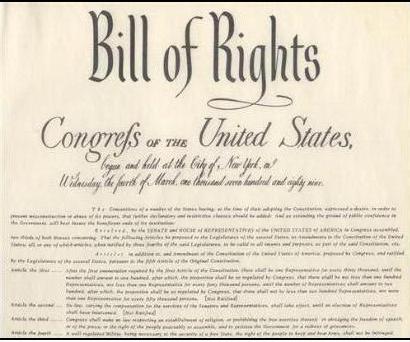
![The Fifth Amendment, part of the US Bill of Rights, addresses due process, double jeopardy, self-incrimination, and eminent domain.]() By: TeX HeXThe Fifth Amendment, part of the US Bill of Rights, addresses due process, double jeopardy, self-incrimination, and eminent domain.
By: TeX HeXThe Fifth Amendment, part of the US Bill of Rights, addresses due process, double jeopardy, self-incrimination, and eminent domain. -
![A prosecutor may make a plea deal with a witness in exchange for testimony.]() By: Photographee.euA prosecutor may make a plea deal with a witness in exchange for testimony.
By: Photographee.euA prosecutor may make a plea deal with a witness in exchange for testimony. -
![People may jokingly "plead the fifth" in casual settings to avoid self-incrimination.]() By: Riccardo PiccininiPeople may jokingly "plead the fifth" in casual settings to avoid self-incrimination.
By: Riccardo PiccininiPeople may jokingly "plead the fifth" in casual settings to avoid self-incrimination.



Discussion Comments
My personal understanding of invoking the fifth amendment is that the witness cannot be forced to provide an answer that could incriminate him or her in a separate criminal act.
A witness is not on trial, and has not been charged with anything connected to the case at hand. However, certain answers could make that witness appear guilty of other crimes. In the rape case discussed earlier, the witness may invoke fifth amendment rights for any number of reason, not necessarily the specific crime of sexual penetration. If he has been called as a witness, he is only obligated to provide information related to the defendant's case, not necessarily any criminal acts he himself may have committed. The prosecution and the jury can infer guilt from his reluctance to provide a simple yes or no answer, but under the fifth amendment he cannot be compelled to provide prosecutors with a confession of other crimes not committed by the defendant himself.
Again, a witness is not on trial, but he or she could unintentionally provide reasonable doubt or a confession if he or she is not advised of his or her fifth amendment rights against self-incrimination.
Okay, for a witness to plead the fifth when being asked "have you ever penetrated the victim" does that mean that the witness is basically guilty of penetrating the victim, since he didn't say no to such a simple question?
The witness is telling me that he is innocent and that his lawyer told him to plead the fifth. My opinion is that with such a simple question, I think he should have said no if he was innocent.
Can someone help me to understand this any better, or am I correct that more than likely he is guilty? -Kelly
Is it true that if a person is under oath and "pleads the fifth" in answer to a specific question, that person must then "plead the fifth" for all questions posed by the questioner? One of the online sites said that if one answer is given to a question, the protection of the Fifth Amendment is lost. I'd like to be clear on this.
Say I already gave the prosecutor info but now they are making me go to trial. can I plead the fifth?
Lavallaa- To answer your question, the defendant whether he remembers the incident or not is not obligated to incriminate himself.
He can plead the fifth and not have to reveal anything. It is the prosecutor that has to prove that he committed the infraction.
The defendant does not have to help the prosecutor by revealing information whether he has it or not. I hope that helps you.
What if someone accused someone of something that they may be subpoenaed to court for and they don't remember the incident because they were intoxicated? What would someone need to do in this circumstance?
Post your comments