
At HomeQuestionsAnswered, we're committed to delivering accurate, trustworthy information. Our expert-authored content is rigorously fact-checked and sourced from credible authorities. Discover how we uphold the highest standards in providing you with reliable knowledge.
What is Linen?
Linen is a woven fabric made from the fibers of flax plants, and it is one of the oldest and most expensive textiles in the world. Weavers in ancient cultures discovered that flax’s fibrous, tough stems could be stripped and converted into tough, durable threads that resist moisture, though the refining process was and still remains somewhat time consuming. In ages past linen was reserved for royalty and the very wealthy. Modern technology has made production easier and more streamlined, but in general this type of fabric is still quite costly.
Popular Uses

The fabric is perhaps most commonly used in clothing. It is prized for its lightweight, cool feel even in hot weather, and people also tend to like its crisp, professional look. Business suits, formal jackets, pants, and skirts are some of the more popular pieces, and wardrobe accents like handkerchiefs and gloves can also be found in many places. The material is usually an off-white color, but the fibers tend to take dye well and as a result can often be found in a wide range of colors.

This fabric is also common in the home. Curtains and pillow coverings made of this material often give a polished look to a room, and it has long been used for tablecloths, napkins, and bed sheets, too. Its popularity on the table and in the bedroom has led to the name’s becoming somewhat generalized in many places. People will often speak of “bed linens” or “table linens” when what they really mean are napkins, tablecloths, and sheets more broadly, without reference to what they’re actually made out of.
Basic Characteristics and Quality Gradations

Good quality linens are generally very smooth to the touch, and often have a slight sheen to them. The material absorbs and loses moisture faster than most any other fabric, which is one of the main reasons it is so popular in warm climates. In many cases, it will actually wick away sweat and humidity, and it is typically lint-free and repels dirt and dust, too.

Flax fibers are also very durable, which makes the fabric strong without causing it to feel rough. The material won’t typically stretch over time, but the fibers can weaken or break down if they are creased or folded the same way over and over again. The fabric does tend to wrinkle easily, and owners have to take great care when folding and storing linen so that creases don’t become permanent.

Well manufactured material tends to have a very smooth, flawless finish. The weave is usually very tight and the fabric should have a consistent sheen and thickness. Textiles that are woven on lower-quality machines or that come from inferior flax plants may have a bumpier finish thanks to what are known as “slubs” on the fibers. Slubs are small knots that don’t usually affect how the material performs, but can impact its appearance or feel. Clothing and other items made with low-grade fibers tend to be less expensive, but don’t often have the same look of finer weaves.
Care and Cleaning
Most experts recommend hanging or rolling linen rather than folding it to avoid wrinkling. Creases can often be removed with a hot iron, but ironing can be hard because of how easy it is to accidentally add new wrinkles. Spritzing the fabric to create steam can help, and ironing when damp can also work in many cases.
The material is generally machine washable, which makes it easy to launder at home. Many people choose dry cleaning, though, as professionals are often able to expertly press the material to keep it looking new. Stains should usually be treated right away with soap and water or a specific linen cleaning product. Although it is durable, the fabric can react badly to many chemical cleaners and stain removers. It’s really important for people to read the labels on both their garments or accessories and any cleaning solvents in order to minimize the risk of damage.
How It’s Made
Making this fabric is usually somewhat difficult. Flax plants, known scientifically as Linum usitatissimum, grow in most parts of the world, but they can be temperamental and it usually takes many plants to make even a small swatch of fabric. The key fibers are located in the stems, which have to be separated from the leaves, blooms, and roots of the plant in order to be useful. Traditionally this is all done by hand, but modern harvesters tend to use specialized machines. Machine operations have to be very precise, though; the fibers are very strong, but they can be easily damaged during collection. Plants that are pulverized or smashed are of little use to weavers.
Once the stems have been collected, they must be “retted,” or stripped down into their essential fibers. This is most commonly done with the help of either natural or chemically-produced bacteria that eat away at the stalks’ woody exterior. Retting was once done almost exclusively in river water, but modern manufacturers more commonly use large tubs of treated water.
Next the fibers have to be combed to separate the soft from the stiff materials, then filtered so that only the soft remain. These are then spun into long threads, stored on spools, and sent to weavers. Western Europe is home to most commercial flax farms, and many of the world’s most prized and valuable textiles come from this region as a result. The plants grow well in most climates, though, and the material can be made almost anywhere. The trick is having enough of a crop to yield the fibers needed for production.
Place in History
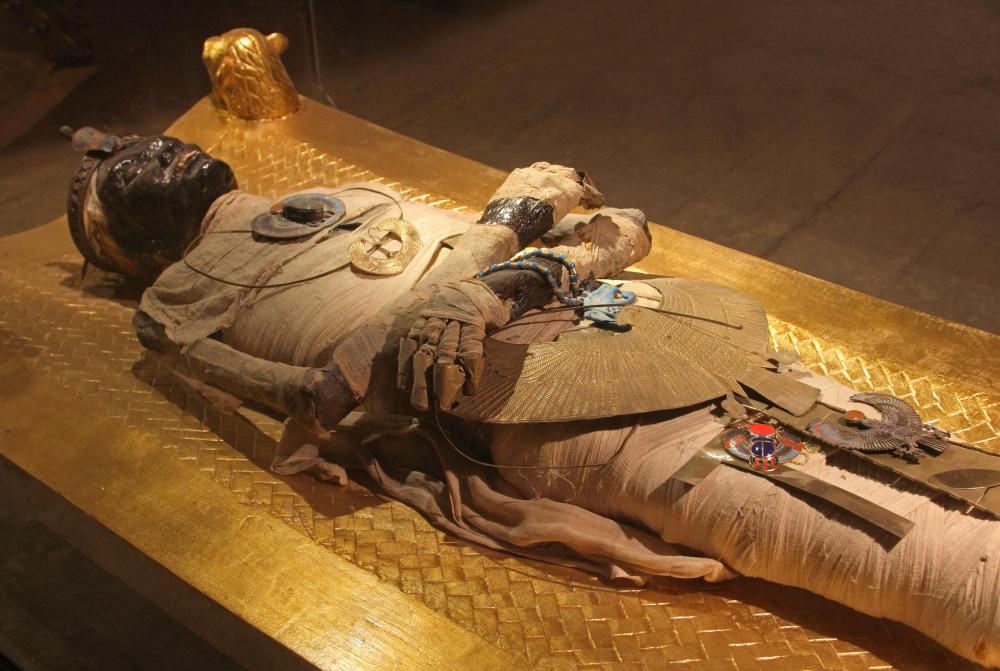
This material has a long and storied past, and is believed by many scholars to be one of the first fabrics ever made. Back when flax had to be collected and stripped by hand, the fabric was often made exclusively for royalty. Archaeologists in Egypt, throughout the Middle East, and in many ancient Indian kingdoms have found evidence of linen robes believed to have been worn by kings and members of the aristocratic classes. It is also mentioned a number of times in the Bible, usually associated with royalty or the high priesthood of the Old Testament.
AS FEATURED ON:
AS FEATURED ON:


-
![The flowers of a flax plant, the stalk of which is used to make linen.]() By: Marina LohrbachThe flowers of a flax plant, the stalk of which is used to make linen.
By: Marina LohrbachThe flowers of a flax plant, the stalk of which is used to make linen. -
![A folded square of linen.]() By: ViktorA folded square of linen.
By: ViktorA folded square of linen. -
![Bedsheets made with linen.]() By: barneybooglesBedsheets made with linen.
By: barneybooglesBedsheets made with linen. -
![Linen was used to wrap the mummies of ancient Egyptian royals.]() By: TattyLinen was used to wrap the mummies of ancient Egyptian royals.
By: TattyLinen was used to wrap the mummies of ancient Egyptian royals. -
![Linen in the home can refer to bed linens, such as sheets.]() By: MIGUEL GARCIA SAAVEDLinen in the home can refer to bed linens, such as sheets.
By: MIGUEL GARCIA SAAVEDLinen in the home can refer to bed linens, such as sheets.



Discussion Comments
I've got some textile textbooks from the 1950's and one says the country that produces the most linen is Russia. Does anyone know if this is still the case?
Yes dry cleaning with proclone will keep them soft as they are. Additional softening requirements if given to dry cleaner can make it more soft. Do not wash them as you would not be able to press them.
I just bought colored sheer linen panel curtains that say they must be dry cleaned. Since I can't wash them to soften them, will dry cleaning soften the material at all. Anyone know?
Could you give me information on linen about its washability and staining. also what it is made of (I mean like is it woven, etc.)
I always switch to my linen sheets for the hot summer nights. Very comfortable!
i think the linen garment will be popular in china.
Linen is so comfortable, neat and expensive looking. The big drawback is wrinkling, so it is not very practical, especially not for traveling.
this web site totally helped so much with my assessment.
i am doing about linen for my DT project and this website has really helped me!
hi would like to know the behavior of this fiber when we make fabric using knitting machines.
hi,
interesting article. would like to know if we can get stable fabric if we 'knit' the linen yarn on machine to make knitted shirts. And how to render stability in knitted fabrics made in Linen.
Well, linen almost always looks crisp and cool. It wrinkles really fast, and in the heat the wrinkles can become kind of ironed in almost. I love wearing linen in the heat because it is so cool but I hate dealing with the wrinkles.
Post your comments