
At TheHealthBoard, we're committed to delivering accurate, trustworthy information. Our expert-authored content is rigorously fact-checked and sourced from credible authorities. Discover how we uphold the highest standards in providing you with reliable knowledge.
What is Residual Urine?
 Tricia Christensen
Tricia Christensen
Tricia Christensen
Residual urine is urine left in the bladder after a person has urinated. Voiding the whole contents of the bladder is generally a good idea, when you can. Sometimes people who leave urine in the bladder are suffering from poor bladder muscular tone, or from conditions that restrict the flow of urine, like an enlarged prostate or bladder stones.
The difficulty in not voiding the bladder entirely is that urine remaining in the bladder can become a good culture for bacterial growth. People who frequently leave residual urine in the bladder may be at much greater risk for urinary tract infections (UTI). UTIs can create more residual urine, because voiding the bladder may be difficult, painful, or the urine stream can become partially obstructed.

When people are unable to fully clear their bladders, and leave residual urine, they also may feel the need to urinate more often. Any new urine entering the bladder combines with the urine that's already there to fill the bladder quickly. This can lead to poor nights of sleep, lots of bathroom breaks, and also the uncomfortable feeling that the bladder is never fully empty.

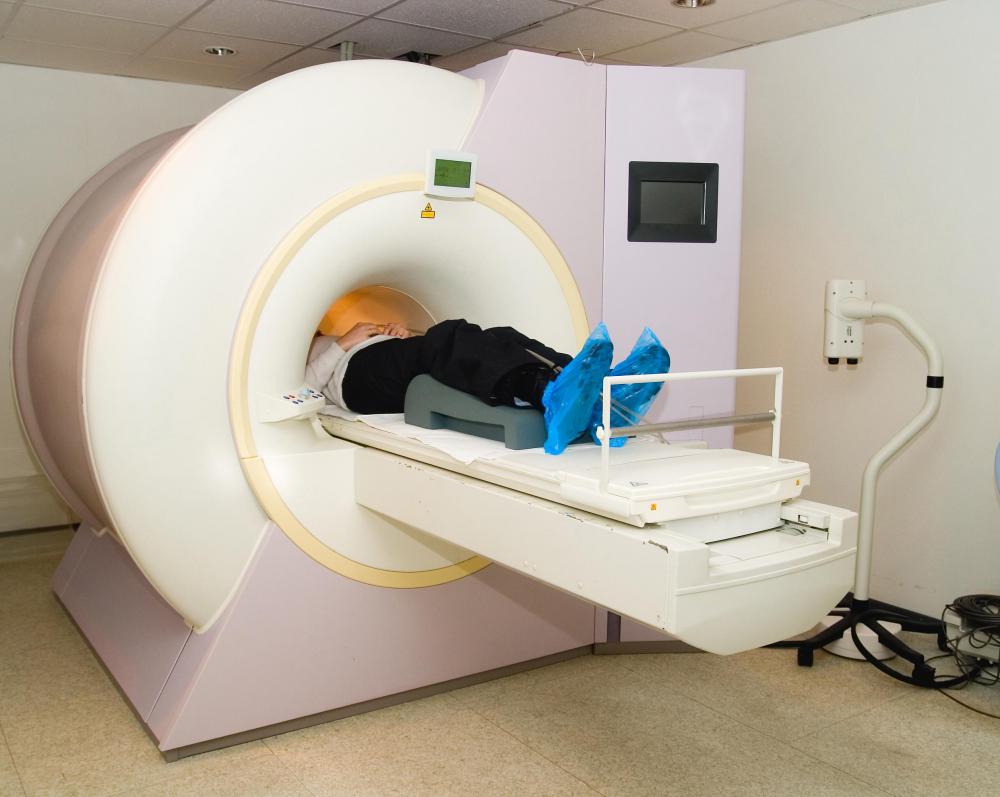
When people have UTIs on a regular basis, doctors may want to evaluate the bladder to measure residual urine. This is easily accomplished by measuring the urine level through sonogram, after a person has urinated. Unfortunately, a sonogram may not always work, since visualizing the pelvic region is much easier when a person has a full bladder. People who are significantly overweight may not be able to be tested in this manner. In this case, computerized axial tomography (CAT) scans may be used instead.

It’s important to pay attention to the frequency of UTIs since they can suggest other conditions. In men, particularly as they age, problems with residual urine can indicate enlarged prostate and prostate cancer. In women and men, poor muscle tone in the bladder may suggest bladder cancer, which is fairly uncommon. In any case, when one urinates, it’s a good idea to make sure to urinate as fully as possible, so that little urine remains in the bladder.

Doctors suggest that you wait a few moments before leaving the bathroom, and try urinating again if you've had problems in the past with residual urine. Often, waiting just a minute or two before trying again can help clear residual urine. This is always good advice if you have frequent UTIs that are not caused by any known physiological problems. Fully voiding the bladder may help reduce their incidence.
Tricia Christensen
Tricia has a Literature degree from Sonoma State University and has been a frequent TheHealthBoard contributor for many years. She is especially passionate about reading and writing, although her other interests include medicine, art, film, history, politics, ethics, and religion. Tricia lives in Northern California and is currently working on her first novel.
Learn more...
Tricia Christensen
Tricia has a Literature degree from Sonoma State University and has been a frequent TheHealthBoard contributor for many years. She is especially passionate about reading and writing, although her other interests include medicine, art, film, history, politics, ethics, and religion. Tricia lives in Northern California and is currently working on her first novel.
Learn more...AS FEATURED ON:
AS FEATURED ON:


-
![Residual urine can lead to frequent trips to the bathroom.]() By: Africa StudioResidual urine can lead to frequent trips to the bathroom.
By: Africa StudioResidual urine can lead to frequent trips to the bathroom. -
![A doctor's visit may be in order if experiencing problems with residual urine in the bladder as it can be a sign of other issues like enlarged prostate or bladder stones.]() By: Monkey BusinessA doctor's visit may be in order if experiencing problems with residual urine in the bladder as it can be a sign of other issues like enlarged prostate or bladder stones.
By: Monkey BusinessA doctor's visit may be in order if experiencing problems with residual urine in the bladder as it can be a sign of other issues like enlarged prostate or bladder stones. -
![Symptoms of residual urine in older men can indicate an enlarged prostate.]() By: peterjunaidySymptoms of residual urine in older men can indicate an enlarged prostate.
By: peterjunaidySymptoms of residual urine in older men can indicate an enlarged prostate. -
![Measuring residual urine may be done using a CAT scan.]() By: Andrey UshakovMeasuring residual urine may be done using a CAT scan.
By: Andrey UshakovMeasuring residual urine may be done using a CAT scan. -
![Problems with residual urine can indicate prostate cancer, especially in older men.]() By: peterjunaidyProblems with residual urine can indicate prostate cancer, especially in older men.
By: peterjunaidyProblems with residual urine can indicate prostate cancer, especially in older men.



Discussion Comments
My question was not about urinals per se. I use hand held urinals and after use, I have a gradual buildup of whatever that coats the inside of the plastic. What is that residue?
I just had a c- section done a week ago. When they removed my catheter, I was able to void but very little. I would have massive amount of residual urine left in my bladder. Every time this happened they would put my catheter back in. Every time they would remove the catheter the same thing would happen.
I'm tried of the catheter but also tired of the pain and pressure I experience with all the residual urine, but it builds up and I can't get it out. Is there any hope that I can ever have normal function of my bladder again?
@Post no. 7: You are not alone my friend. I am the same age as you and for the past one and a half years, I have been self catheterizing three to four times a day. I've had numerous complications such as UTIs. I've had TUIP and and TURP surgeries. I am now just starting to get back to a normal life.
I'm still taking Flomax for now, but as a result of the medication and/or the surgeries, no more skeet skeet for me. Dry orgasms are not pleasureless- they just don't feel quite as good. I would say about 75 percent of a normal orgasm.
I totally feel you on this, though. It is an important pleasure in life that may now be permanently diminished. But as you mentioned yourself, things could be much much worse. Thank God for what you have every day. Amen.
I urinate the same amount as everyone else but have 500ml residual in my bladder! This is causing severe repeat UTI. So, after blood tests, scans, etc., I am booked for a camera/cut operation and have been told I will, in all probability never ejaculate again after the procedure as it will go backward into my bladder!
I do not have prostate enlargement or cancer and it is caused by a thickening of the neck of my bladder. I am devastated over the loss of my sexual pleasure. It really is all I have left. I listen to the advice about how others cope, but I really have nothing else left to me. That it should come to this at 46.
I will no doubt be called shallow, and be pointed towards paraplegics who make a go of it. I always knew that was never an option for me. I have sacrificed so much in life, that this is all I have left, and to lose this.
my KUB shows that I have 94 milliters residual urine. No other complication is mentioned. I have an enlarged prostate. Will i need to undergo an operation?
does this affect your sexual performance as a man? in the process of making love, you could feel like urinating and this subsequently lead to early or premature ejaculation. what then can be done about it?
i know women who squat over a public toilet rather than sit to urinate...i've heard that this puts you at increased risk of not completely emptying your bladder, which in turn increases your risk of developing a bladder or urinary tract infection!
The normal amount of urine produced in a day, according to the National Institutes of Health, is about 800 to 2000 milliliters per day, which is about 27 - 68 fluid ounces.
Post your comments