
At TheHealthBoard, we're committed to delivering accurate, trustworthy information. Our expert-authored content is rigorously fact-checked and sourced from credible authorities. Discover how we uphold the highest standards in providing you with reliable knowledge.
What Is the Xiphoid Process?
The xiphoid process is a small triangular protrusion in the skeleton of most vertebrates that extends down from the sternum in the center of the ribcage. In babies and young children it is typically made of flexible cartilage, but typically calcifies into bone by early adulthood. Almost all animals have this anatomical feature, which is sometimes also known as the xiphisternum, the ensiform process, the ensiform cartilage, or the xiphoid cartilage. Its primary job is to help join the sternum and the ribcage, and its early flexibility can help protect growing organs, too.
Primary Function

Even though this bone starts out made of flexible cartilage, it is usually considered an “immobile joint,” which means that it can’t move or bend with the body. Its flexibility is important where growth and development are concerned, though. The process is the both the lowest bone on the sternum and the smallest, and it helps the body anchor the diaphragm, the transverse thoracic, and the rectus abdominis. In humans it is located at the level of the 9th thoracic vertebra and the T6 dermatome. Many medical experts believe that the softer beginnings of this bone allow the ribcage and sternum the ability to grow, expand, and adjust without putting too much tension on each other.
Appearance at Birth

Some parents are alarmed to actually see this triangular piece protruding from the skin of their newborn babies and small infants, but in most cases this is completely normal. At birth the process often sits slightly above the base of the sternum, but usually descends into position within a few months. Even still, its triangular tip can sometimes be felt by pressing around the skin of the lower ribcage, particularly in slender children.
Ossification

Sometime between late childhood and early adulthood — typically between the ages of 15 and 29 — the cartilage turns to bone in humans. This process is known as “ossification.” It usually happens slowly over months or years, but by the end the xiphoid process is typically completely fused to the sternum and is indistinguishable in terms of bone density and formation.
Variations

This bone is normally triangular in shape, which is partly where it gets its name: “xiphoid” comes from the Greek word xiphos, which means “straight sword or blade.” The cartilage edges are frequently likened to blades extending out of the sternum. Some people have processes that are slightly different shapes, however, and in most cases these are considered perfectly normal, too. Bifurcation, where the main body has been split into two separate parts, is relatively common, for instance; perforation, where there is a hole or slit in the surface, also happens. Most of the time these variations are due to genetics and heredity, and there isn’t usually any sort of health risk.
In Other Vertebrates

Most animals with ribcages have a xiphoid process, though the shape and precise function can vary from species to species. It’s usually the case that the bone starts as cartilage and hardens with age, as it does in people, but not always. The primary function and location is usually consistent, though.
Medical Considerations
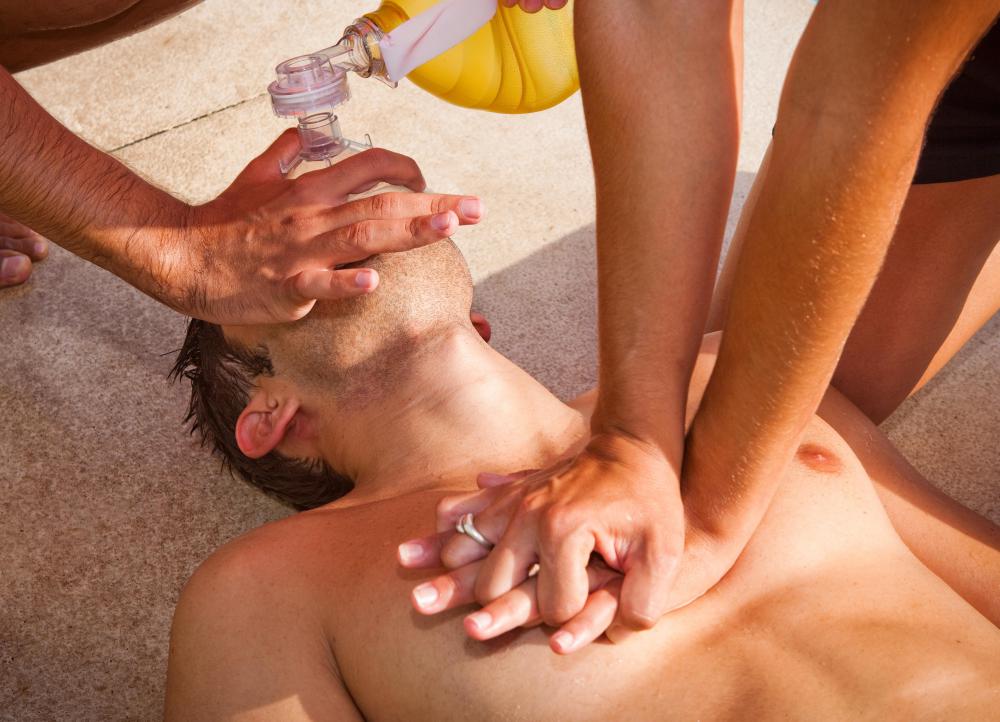
When giving any type of cardio-pulmonary resuscitation (CPR), care should be taken to avoid pressure on the xiphoid process due to possible damage and even breakage. If this bone breaks, it can sometimes actually dislodge from the sternum and be pushed into the diaphragm or even up into the heart muscle. Even if it doesn’t go anywhere, a loose shard of bone floating in the body can lead to trouble later on. As a result, breakages are usually considered very serious and often require immediate surgery to repair.
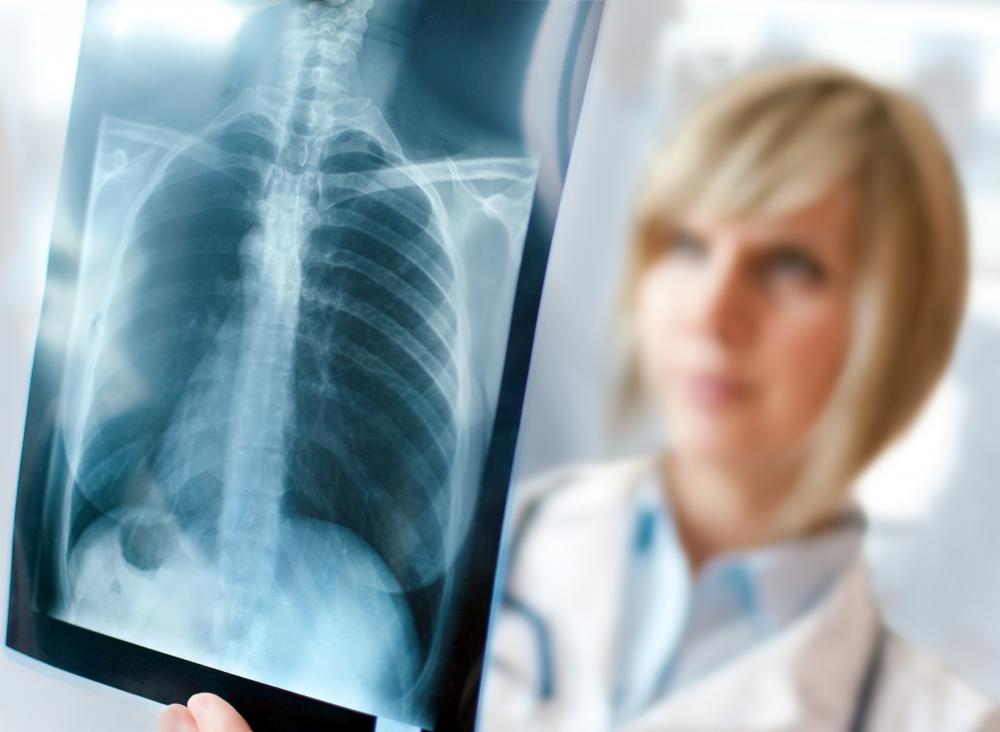
The xiphoid region can also sustain damage in any type of collision or impact, and can sometimes even be dislodged or cracked by broken ribs. A breakage or injury can take months to heal and may result in a bony lump. Most experts recommend that anyone who has suffered a chest injury or who feels pressure in their ribs or lungs after an accident get checked out by an expert to rule out any serious consequences.
What Causes Pain in the Xiphoid Process?
There are a few ways that the xiphoid process is of clinical significance. Consider consulting a physician immediately for significant or prolonged pain in the sternum.
Injury
An accident or sports injury involving the chest may cause swelling or pain in the xiphoid process. Lifting heavy objects with improper techniques can also damage the area.
CPR
The force of chest compressions during cardiopulmonary resuscitation can break or detach the xiphoid process and may also result in injuries to the diaphragm.
Xiphoidalgia
Xiphoidalgia, also called xiphodynia is a rare musculoskeletal disorder that mimics several other abdominal and thoracic syndromes. One of its symptoms is pain and soreness in the sternum.
Ossification
After a certain age, a person may become aware of the hardening of the xiphoid process into total bony growth. The sensation of this growth is different than the previous, more flexible cartilage and can be mistaken for an anomaly.
Fluid
Pericardiocentesis is the normal process of fluid moving away from the pericardium. As the heart is adjacent to the xiphoid process, that part is affected by changes in body fluid systems.
Acid Reflux
Sometimes, indigestion can cause discomfort and pain in the xiphoid process. These sensations can linger in cases of chronic gastrointestinal issues.
Exertion
The xiphoid process is attached to many muscles, including the abdominal diaphragm, which controls breathing. It also anchors the abs. Therefore, heavy breathing and core physical exertion can result in soreness in the xiphoid process.
Where Is the Xiphoid Process?
Also called the xiphisternum, the xiphoid process is a small process of the inferior sternum. It is an extension of the lower part of the sternum in the very middle. It is adjacent to the 9th thoracic vertebra and the T7 dermatome, at the most distal edge of the breastbone. It is possible to feel where the lower ribs connect to the breastbone.
Attachment Points
The xiphoid process anchors to many important points in the body:
- The aponeurosis of the internal and external abdominal oblique muscles
- Diaphragm posteriorly
- Rectus Abdominus muscle anteriorly
- Minimal contribution to the articulation of the seventh rib
The tip of the xiphoid process may be seen in infants as a small lump just below the notch in the sternum. Somewhere between puberty and age 30, the metasternum fuses to the sternum with a fibrous joint. It is nonmoveable, and the ossification process typically begins at age 40.
How Big Is the Xiphoid Process?
There are three parts to the sternum: the manubrium, the gladiolus (or body), and the xiphoid process. The last is the smallest region. Externally, it can be found in the anterior thoracic wall, in the epigastric region. It is, on average, about 2 to 5 cm in length. Computed tomography scans indicate that some xiphoid processes may elongate and curve dorsally, reaching up to 6 cm long.
It is flat, tapered, and bifurcated, with a shape and notched appearance that roughly resembles a sword. The Greek word "xiphoid" means "swordlike." It is also called the ensiform process from the Latin "ensiform" for "sword-shaped."
AS FEATURED ON:
AS FEATURED ON:


-
![The xiphoid process (Latin: processes xiphoideus) is a small triangular cartilaginous extension of the breastbone.]() By: reinegThe xiphoid process (Latin: processes xiphoideus) is a small triangular cartilaginous extension of the breastbone.
By: reinegThe xiphoid process (Latin: processes xiphoideus) is a small triangular cartilaginous extension of the breastbone. -
![CPR may cause injury to the xiphoid process.]() By: davilesCPR may cause injury to the xiphoid process.
By: davilesCPR may cause injury to the xiphoid process. -
![The xiphoid process is located at the base of the sternum.]() By: Sebastian KaulitzkiThe xiphoid process is located at the base of the sternum.
By: Sebastian KaulitzkiThe xiphoid process is located at the base of the sternum. -
![The rib cage includes 12 pairs of ribs, the sternum and 12 vertebrae.]() By: pixdesign123The rib cage includes 12 pairs of ribs, the sternum and 12 vertebrae.
By: pixdesign123The rib cage includes 12 pairs of ribs, the sternum and 12 vertebrae. -
![The xiphoid region can be dislodged or cracked by broken ribs.]() By: creo77The xiphoid region can be dislodged or cracked by broken ribs.
By: creo77The xiphoid region can be dislodged or cracked by broken ribs.



Discussion Comments
I have gad mild pain in my xiphoid process in my chest bone for two or three days. How can I relieve it?
When I was in sixth grade, we had a science day with lots of presentations about the human body. We went around to different booths learning about things like heart rate and skeletal systems, and I remember being told that a child has more bones in the skeleton than an adult, because as we age our bones calcify and fuse together, making fewer, but bigger and stronger, bones in our bodies.
When we had review time at the end, one of the presenters asked us if an adult's body had more or fewer bones than a child's. All of my classmates around me were murmuring "more", and I raised my hand to say "fewer". My classmates all told me I was wrong and acted like I was stupid. Hearing the presenter tell me I was right was one of the most smug memories I have of that school year.
The human body is a fascinating thing, and it does not always function the way you think it will, so we all have things we can still learn about it.
When I was in sixth grade, we had this day of science presentations at my elementary school. We went from booth to booth learning about things like heart rates and bone density, and I remember we learned that a child has more bones than an adult, because they calcify and fuse together over time.
I remember that when we had review time at the end, one of the presenters asked if adults had more or fewer bones than children; I raised my hand to say fewer, and all of my classmates told me I was wrong. Having the presenter tell me I was right was one of my best memories of that school year.
The human body is really fascinating, and it doesn't always work the way you would expect it does.
So this protruding xiphoid process is one of those examples of the ways in which a child's skeletal system changes as the child grows up. I find the way our bodies naturally change as we age to be fascinating.
Post your comments